Features

  • Multiple unit stalwart – Dual-voltage pioneers

    Multiple unit stalwart – Dual-voltage pioneers

    by

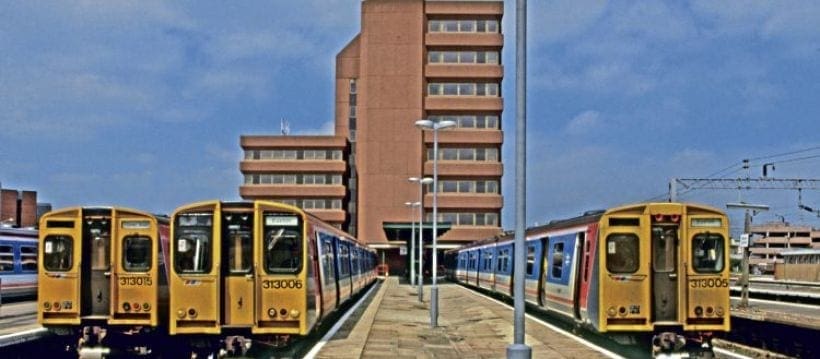
    On November 8 this year the Class 313 EMUs will have been in service for 40 years. Originally designed for one short line, with unusual requirements, their versatility and durability has meant that they have all survived and have seen redeployment elsewhere, as Quentin Williamson explains. ALTHOUGH British Railways had greatly extended electric traction since…

    Continue reading »

  • Presence of mind

    Presence of mind

    WITH postwar shortages now over, the world was changing and Britain with it; increasing competition from roads, the growth of consumerism and the general standard of living was increasing. The railway’s response was its modernisation programme. By the mid-1960s the modernisation of motive power was almost complete across British Rail and the sight of a…

    Continue reading »

  • Fateful last run of DP2: Presence of Mind

    Fateful last run of DP2: Presence of Mind

    by

    In the third of our series looking back 50 years, Fraser Pithie recalls and considers the railway accident in July 1967 at Thirsk, North Yorkshire on the East Coast Main Line. An unintended situation arising from BR’s Modernisation Programme played a central part in the accident, but a potentially more severe outcome was also surely…

    Continue reading »

  • Classic railway stations: Nottingham Victoria

    Classic railway stations: Nottingham Victoria

    by

    On September 4, 1967, Nottingham Victoria station bade farewell to its last passenger. In the first of a two-part feature to mark the 50th anniversary of the closure of a much loved station, Robin Stewart-Smith looks at the years from construction to the start of the Second World War in 1939. Early years and construction…

    Continue reading »

  • PRACTICE & PERFORMANCE: When Steam Met its Waterloo

    PRACTICE & PERFORMANCE: When Steam Met its Waterloo

    by

    Fifty years ago, July 1967 marked the end of steam on BR’s Southern Region. Keith Farr recalls some of the outstanding performances on the former LSW main line out of London Waterloo. WATERLOO station in the 1950s was different from other London termini. Substantially rebuilt by 1921, it was more spacious and, thanks to third-rail…

    Continue reading »

  • Nottingham Victoria

    Nottingham Victoria

    Early years and construction Nottingham’s massive Victoria station was a magnificent structure – the last of the inspiring Victorian railway age ‘Cathedrals of Steam’. In its early days, the stunning overall glazed roof and elegant end screens made it light and airy – in spite of the two vast island platforms being well below ground…

    Continue reading »

  • All aboard Truffadou – preservation French style

    All aboard Truffadou – preservation French style

    by

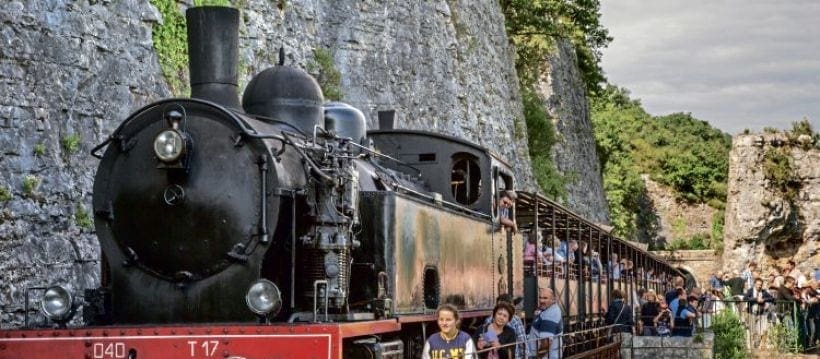
    John Hannavy takes a trip on one of France’s few preserved steam railways – and discovered it has a very interesting history. WHEN the Metropolitan Railway carried its first passengers underground in London in 1863, they travelled in open carriages – more like cattle trucks – and were hauled through the tunnels by steam locomotives.…

    Continue reading »

  • FACING UP TO THE CHALLENGE

    FACING UP TO THE CHALLENGE

    by

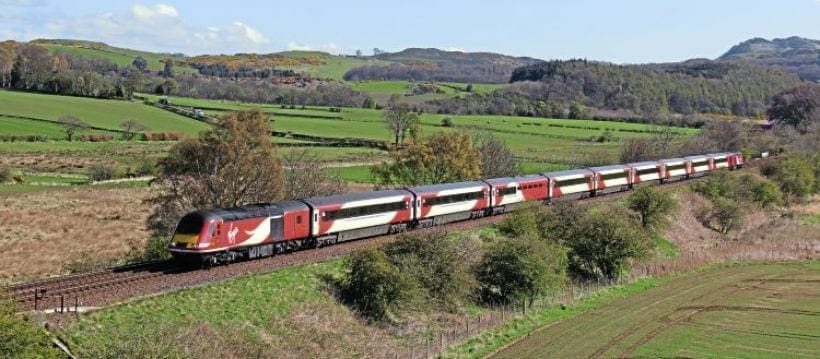
    The East Coast has proved something of a ‘poisoned chalice’ to franchisees in the past, but Stagecoach/Virgin are determined to make a success of it despite open access threats and jitters caused by the recent ‘Brexit’ vote. Nick Pigott meets managing director David Horne to find out how the operator intends to meet the challenges.…

    Continue reading »

  • The RCTS: then and now

    The RCTS: then and now

    by

    Between 1961 and 1968 an RCTS member attended grammar school on Battersea High Street and so passed through Clapham Junction and under the site of the West London Extension Railway’s Battersea Station, destroyed by incendiary bombs in October 1940. Every morning around 8.20am a steam-hauled passenger train, comprised of four compartment coaches headed by a…

    Continue reading »

  • The Kestrel story: The big bird that flew too far

    The Kestrel story: The big bird that flew too far

    by

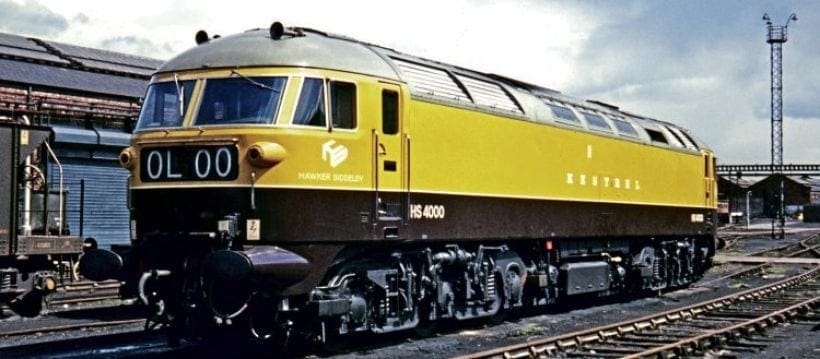
    Part 1: The British years (1967-71) by Nick Pigott As the most powerful single-engine diesel locomotive in the world at the time, Kestrel promised a motive power revolution… but it turned out to be ‘too good for its own good’! Shunned by BR despite its 125mph speed potential, it vanished behind the Iron Curtain where…

    Continue reading »