We have received payment for the content in this article. Learn more.
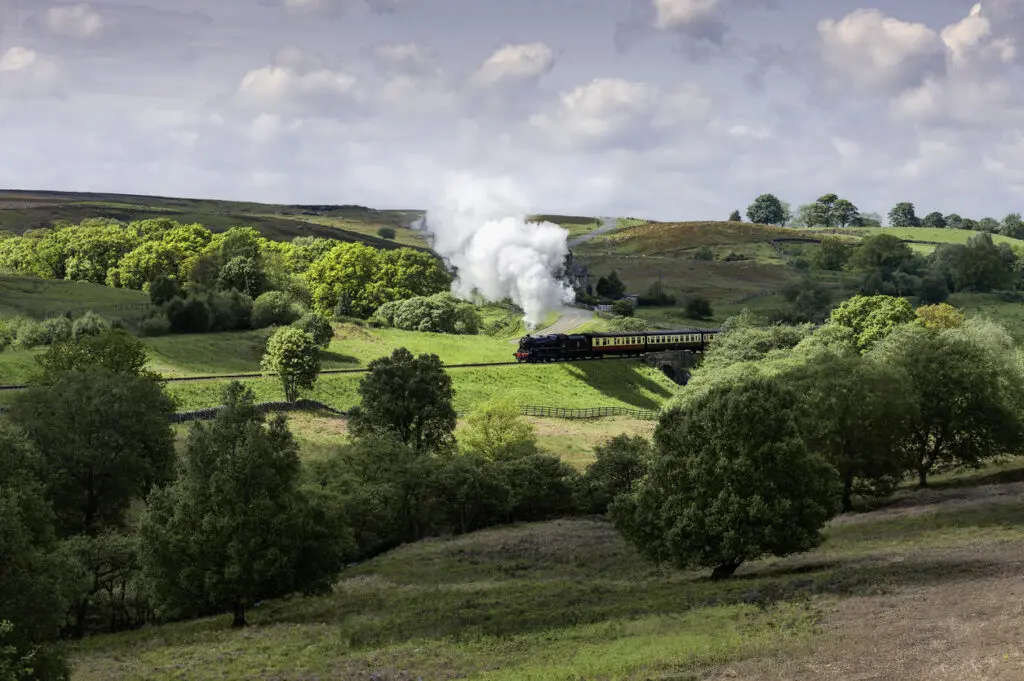
When you think of trains, what comes to mind? Your younger years playing with Lego, or the very first time you travelled across the country with just your backpack and a ticket ride to the unknown?
Well, thanks to technology, you can now bring back that nostalgia and re-live them through train simulators. Operating one of these simulators can be an exciting opportunity to show your understanding of train mechanics and an interesting way to spend time. Slow-paced train simulation games have enabled countless people from the UK to appreciate countryside routes while sitting in the ‘virtual’ driver’s seat. These games reward players with points for keeping an on-time schedule and following all service routes.
Digital interests that sit beside a train simulator
As train simulators become more realistic with better graphics, smoother controls and optional VR, they show a bigger trend in gaming.
Players today want games that feel fresh, creative and more advanced than what they grew up with. Because of this, many people who enjoy train sims also keep an eye on other digital hobbies that are pushing technology forward.
For example, the sites featured on a guide to non GamStop casinos in the UK (Gamstop is the online multi-operator self-exclusion scheme that UK companies must adhere to) are driving forward creativity and technological innovation.
These sites are popular because they offer a large variety of games and modern features, such as a variety of payment methods and bonus incentives. This shows how players now expect more options and exciting ideas from the games they play. In the same way, like casino players look for bigger libraries, new game styles, and better ways to interact, train sim fans look for new routes, better realism and advanced tech-based features.
Both hobbies highlight how competitive the online entertainment world has become. Whether someone is trying a new train route, exploring an interactive casino game, or jumping into another digital experience, the message is the same. Gamers want platforms that feel creative, up to date and ready to take things to the next level.
How technology brings trains to life
Modern simulators try to capture the feel of real railways with surprising accuracy. Developers put effort into physics and subsequently each locomotive responds to gradients, braking and acceleration accordingly.
Cab interiors mirror real layouts and players learn to operate controls as real drivers do. Weather and time of day matter too: A bright afternoon ride feels completely different from an early morning ride in the rain, and these variations add character to each journey.
Sound design plays an important role. A good simulator captures the hum of motors, the thud of wheels over points, the whistle of wind and the rumble of the track. These touches make long drives enjoyable because the train feels alive rather than silent or flat. Modding communities build on this, too. Route builders go to great lengths to recreate real-world lines, matching gradients, signals and station layouts to their real locations.
Others bring long-closed branch lines back into existence, those that exist now only in photographs and timetables. With the appearance of a new community route, players often do research on the real line to learn where trains once ran and why certain stations closed. The blend of creativity and research keeps the genre fresh. With new routes, locomotives and liveries coming through the year, there’s a reason for players to come back over and over. Every update or release is important, instead of being a simple rehash of previous material.
How virtual curiosity leads to real railways
One of the most interesting outcomes of the train-sim hobby is how often it inspires real-world exploration. Players who start by driving a route digitally often end up visiting the real stations, structures and landscapes they see onscreen. Being a railfan has grown among younger players too, particularly those who recognise locomotive classes from their virtual driving. It’s common now to see teenagers at platforms discussing freight flows or explaining how certain signals work.
Virtual experience often gives people a gentle introduction to railway operation as well. They learn how timetables link together, why trains are slow on certain gradients and how different units handle things differently. This background knowledge makes real-world railway visits more enjoyable, as players notice details that others might miss.
Heritage railways benefit from this interest. Many volunteers arrive with a passion shaped by thousands of virtual miles. They help restore rolling stock, assist at open days or support track maintenance. Some eventually pursue careers within the wider industry. While simulators cannot replace formal training, they spark interest and encourage people to get involved with real railways in a meaningful way.
A steady, creative hobby
Railway simulation appeals to individuals who like structured, practical hobbies. Driving requires attention, but it is never frantic. The rhythm of following signals, adjusting braking and arriving at platforms has a steady quality that suits people who prefer activities that encourage focus rather than speed.
Creativity forms another important part of this experience. Some players invest hours in designing landscapes or recreating stations with impressive accuracy. Others paint liveries or produce sound packs that reflect the unique character of individual locomotives. These contributions help the hobby grow because players can have more control over the world in which they design and spend their time.
Where simulation might go next
New technology will help improve existing simulations even further. Train simulation developers will continue to improve systems, such as train physics and railway landscape graphics. Also, successful AR games such as Pokémon Go that have reached around $7.5 billion (£5.67 billion) in market value suggest that the VR market will grow as well, improving the player’s experience of feeling like they are actually inside the train cab. With this in mind, we’ll likely see the development of cooperative multiplayer train driving simulation capabilities in the future.
What seems for sure is that whatever changes may come, the essence of the hobby will remain the same. People like the opportunity to learn, explore, and understand how railways work. Virtual routes can lead to real routes, and many players appreciate the trains that pass through their towns more than they ever thought possible.