In March 1967, The Railway Magazine reported on British Railways’ tests of a Servosafe hot-box detector system on the East Coast main line between York and Pilmoor. The article describes how the equipment worked, the results of its first six weeks of operation and a subsequent order for equipment for the Western Region.
Successful outcome of tests on East Coast main line has led to further equipment being ordered for Western Region
Detecting overheated axleboxes
WHEN signalmen came out on their balconies to watch passing trains, the detection of an overheated axlebox was a matter of direct observation. With the introduction of c.t.c. the direct observation of trains has been replaced by following them on the track-circuit diagram and, to ensure that overheated bearings are reported before damage is done, British Railways has been testing a hot-box detector system manufactured by the Servo Corporation of America.
Enjoy more The Railway Magazine reading every month.
Click here to subscribe & save.
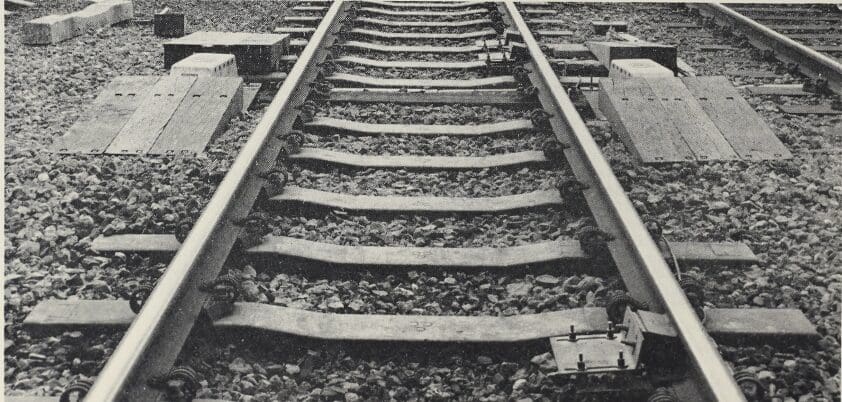
The place chosen for the tests was on a long straight stretch of the East Coast main line, between York and Pilmoor in the former North Eastern Region. Trains normally run at high speeds over this section, and it is one where many cases of overheated axleboxes had been reported.
The Servosafe detection system
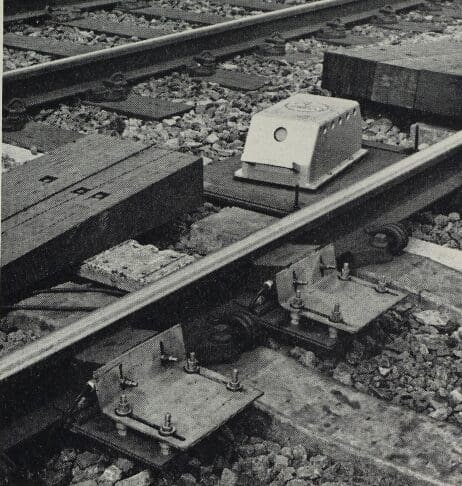
In the Servosafe system, two scanners, each containing an infra-red detector, are positioned in the ballast, one on each side of the track. Mounted in front of these is an optical system, set to scan the trailing side of each axlebox and the under-frame of each wagon. The difference in heat radiation from these two sources is pulsed through electronic amplifiers, housed in a nearby plate-layers’ cabin, to a recording unit in Tollerton Signalbox, five miles south of the position of the scanners.
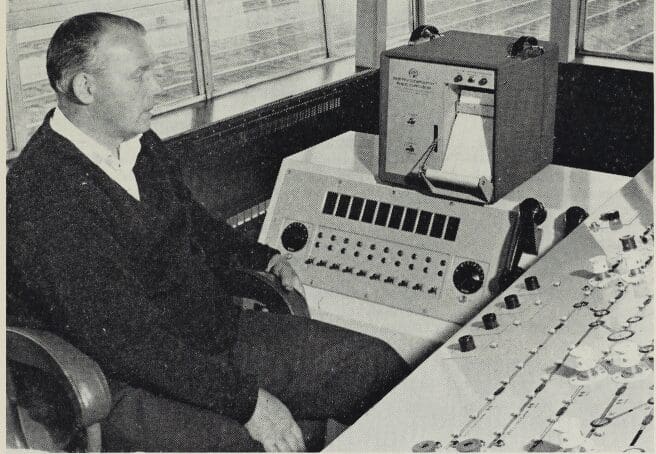
Tollerton Signalbox is equipped with a recording unit and two integrated alarm units. The recorder traces the amplified signals from the scanners on to heat-sensitive graph paper, giving one trace for each side of a passing train. Thermostatically-heated scanner housings automatically compensate for changes in weather conditions and allowance is made also for changes in the surrounding air temperature. An overheated axlebox would not generate as much heat in cold weather as in mild, so the system is deliberately made more sensitive in cold weather.
Differentiating bearing temperatures
One difficulty to be overcome was that roller-bearing axleboxes radiate more heat when running normally than plain bearings, so an overheated plain bearing would give the same signal as a roller-bearing at normal temperature. This was met by a differential alarm monitor which compares the signals of one channel of the recorder with those of the other, comparing the heat radiation from the bearings at each end of the same axle. An alarm is set off if the difference between the two signals is greater than a pre-set value.
When a hot-box is detected a bell rings and two red lamps light up in the signalbox, indicating to the signalman the side of the train on which the defect has occurred. The signalman can then examine the graph to find the exact position of the wagon concerned. The bell can be silenced and the lamps switched off with a reset button.
Results of the first six weeks
During the first six weeks of operation, 133 overheated axle bearings were detected; of these, 59 per cent had damaged journals while the remaining 41 per cent were detected before damage had occurred. The results of this trial have been so encouraging that British Railways Board has ordered five Servosafe hot-box detective and carrier systems from Servo Corporation of America for installation on the Western Region.