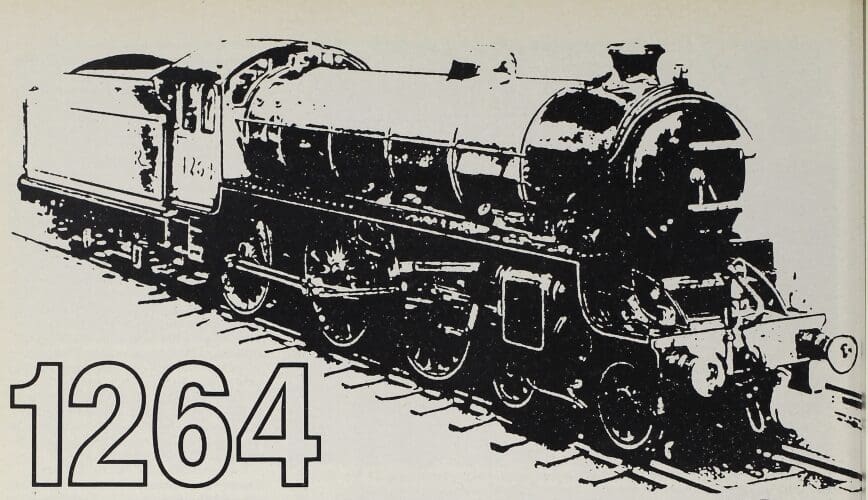
In the October 1989 issue of The Railway Magazine, Thompson B1 Locomotive Trust Chairman Michael A. Cobley outlined the progress being made with No. 1264. Once written off as “the engine with the duff boiler”, the locomotive had endured withdrawal, Barry scrapyard and major boiler problems on its long road through preservation.
Once written off as ‘the engine with the duff boiler’, Thompson B1 4-6-0 No. 1264 is still around, and looking better every day. Thompson B1 Locomotive Trust Chairman Michael A. Cobley outlines the progress so far.
Into service
DURING 1947, as the great era of the London & North Eastern Railway was rapidly drawing to a close, Thompson B1 4-6-0 No. 1264 was quietly delivered to Stratford.
Enjoy more The Railway Magazine reading every month.
Click here to subscribe & save.
Edward Thompson’s ubiquitous wartime mixed traffic design became his most successful all-round locomotive, and between 1942 and 1952 Darlington Works, Vulcan Foundry, Gorton Works and the North British Locomotive Co. Ltd. produced 410 of them. Only 409 were ever in service, though, because one of them, No. 61057 had to be cut up after a serious accident at Witham.
No. 1264 was later stationed at Parkeston (30E) for boat train workings into London. Regular crews were allocated particular engines, so 61264 became ‘Frenchy’s engine’ with regular driver George French and fireman George Maryan.
Displaced from the best express trains by the new ‘Britannia’ Pacifics, B1s regularly deputised for a ‘Brit’ when these were not available for rostered duties, and they handled 11 or 12 bogies to a similar timetable.
In 1960, after an overhaul at Doncaster, No. 1264 was transferred to Colwick (40E) and became a Great Central loco for the first time. Nottingham excursions to Mablethorpe were regular duties, along with passenger, freight and parcels trains throughout the system to Woodford Halse, Aylesbury and Marylebone.
Withdrawal and Barry
With decline of steam in the Nottingham area during 1965, No. 61264 was transferred to Departmental stock that November, renumbered Departmental No. 29 and used as a stationary boiler at Colwick for train heating and washout purposes. On 3 January 1966 both Colwick and Dept. No. 29 was transferred to the London Midland Region. Withdrawn finally in July 1967, the loco was sent to Derby before being despatched to Woodham’s yard, Barry, in April 1968—after a working life of a little over 20 years.
The ravages of five years’ sea air, and the attention of scrapmen, railwayana collectors and preservationists removing non-ferrous parts, boiler fittings, firebars and grate, steam manifold and eccentric cranks was not enough to deter a small group of enthusiasts from North London to consider Dept. 29 as a candidate for a preservation project in the summer of 1973. Within a few weeks a small nucleus of those original members appeared to have enough money between them to negotiate a price of £4,500.
Two surveys were commissioned, and apart from the missing parts the loco was found to be in reasonable condition. When it came time to collect all that promised money, the bank balance stood at just £400 — and most investors had changed their minds! The escalating price of copper increased the cost of the loco to £5,570 plus 10% VAT. Three members put up security for a bank loan and the price was agreed and paid. In July 1976, with sponsorship from the Midland Bank, LNER B1 No. 1264 was the 83rd loco to leave Barry.
Back to the Great Central
The released survivor returned home to the Great Central for the second time. The choice of Loughborough seemed ideal, with good workshop facilities and the promise of funds in the near future. Our arrival on site coincided with the cash crisis then facing the railway company.
Restoration work started slowly. A PMV became our workshop, a container became the parts store and a Shock van became our mess hut — nicknamed the ‘Loughborough Hilton’, with bunk beds, hot and cold running water and icicles on the roof in winter.
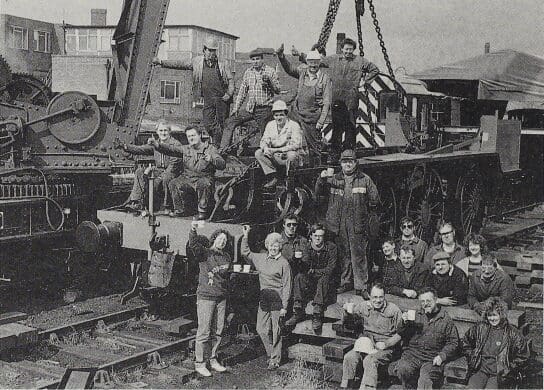
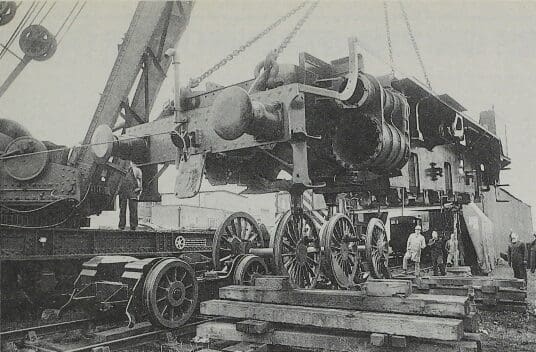
In April 1978, No. 71000 Duke of Gloucester was having its boiler refitted so we co-operated, sharing the cost of the crane, and No. 1264’s boiler was taken off the frames. Contractors were employed to strip the asbestos lagging from the boilers of B1 No. 1306 Mayflower and our own loco — and it was then that the repair patches were revealed on No. 1264.
The boiler crisis
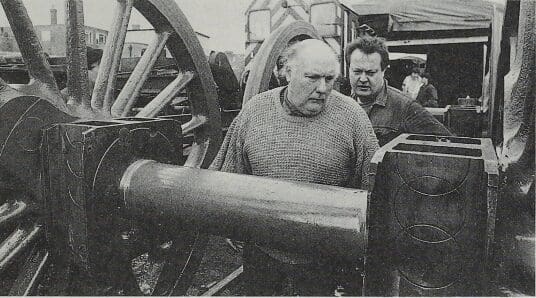
Further inspection by Loughborough’s boiler fitter revealed the copper fire box wasted from nearly one inch thick to 3/16ths: a steel punch went straight through. Another boiler inspection was commissioned and the news stunned the committee members and the Trust: the estimated repairs entailed new copper firebox, new tubeplate, steel outer firebox to be cropped above existing rivetted seams and side plates renewed. The final observation was that, without the facilities and original flanging blocks of a BR works, the boiler was beyond repair. Would No. 1264 be the first loco to go back to Barry?
An article in a railway magazine brought the offer of help from the manufacturer of nuclear power station pressure vessels, but the task seemed too onerous for the risks involved and ‘product liability’ forced the company to withdraw; costs could have been more than £100,000.
Our morale then suffered another blow: running railtours over freight routes with unusual motive power had always been a good fund-raiser, but around this time tours in general were becoming less profitable and less popular. BR was becoming less co-operative, and the bad news of ‘the engine with the duff boiler’ spread so quickly that it seemed worthless to carry on.
Internal wrangles cropped up at the same time, and the last straw came with tax demands for the railtour profits: it seemed the loco would have to be sold to pay the taxman!
Survival seemed impossible, but the re-formed committee group refused to give in without a fight and a battle plan was drawn up.
A battle plan for survival
At Loughborough, work on the frames continued slowly — as one would expect with a lone restorer — and fund-raising was mediocre. The biggest problem was to clear any tax liability and formalise our legal identity. To this end, an owning company was set up—Thompson B1 Locomotive Ltd., followed by a second company to support the loco—Thompson B1 Locomotive Trust, and the Trust was given charity status. Survival was possible, provided the funds came in . . .
After a false start, boiler repairs were commissioned at Pridham Engineering, near Tavistock. Areas of the wasted copper firebox were cut back to sound material and cracked and corroded tubeplates welded and repaired.
A lot of hard work behind the scenes by our Company Secretary was rewarded this year with the final settlement of the dispute with the taxman: the file was closed. Our fund-raising got back into gear, selling secondhand model railway equipment at model railway exhibitions, railway open days and at Loughborough. Restoration continued—and the young lad from Ponders End who started in 1976 is still there complaining—but this year the frames were re-wheeled. The co-operation expected from the railway, as well as a substantial share purchase, were forthcoming; our membership is increasing weekly; and the firebox repairs are well under way at Pridham’s.
The work still to be done
The firebox will need about 300 new stays, a grate and firebars, and we’ll need a new regulator, and a set of tubes—not much change from £25,000.
The cylinders will require some machining before new piston valves and refurbished pistons are fitted. Now that the frames are in the shed at Loughborough, though, the valve gear, coupling rods and connecting rods are being rebushed and refurbished, and some of the plumbing work can start, fitting injectors, and re-fitting the brake gear. The tender is complete but will need two wheelsets re-tyred before running on any railway.
The help of skilled engineers is always welcome, and labourers (usually the committee members) are often required for the heavy lifting, cleaning and painting.
No. 1264 is the only ex LNER engine in which shares can be purchased in the owning company, and these are available in multiples of £10. This will be the major source of our income in the future unless some commercial sponsorship is forthcoming.
Details of membership of the Trust and purchase of shares in the owning company are available from the Company Secretary at the registered office 1 Carlton Bank, Station Road, Harpenden, Herts. AL5 4SU.